Monday, 28 November 2011

Origins
·        Judaism is one of the three prophetic monotheistic religions on the world; the other two are Christianity and Islam.
·        It is prophetic as there were numerous prophets who predicted the coming of a Messiah monotheistic as they believe in one God- mono (one) theology (belief/ study of God)
History
·        Jews are an ancient people of around 3000 years old; their history is told in the bible and is traced back to Abraham of around 1900 BC (before common time era).
·        The Jews have been known as Jews, Israelites and Hebrews. (Jesus was a Jew however the Jews accept Jesus as a wise man, but nit the chosen Messiah as Christians believe, hence Judaism predates and heavily influences Christianity, but is not part of Christianity).
Abraham
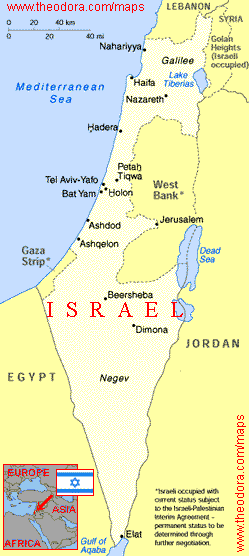
·        Abraham is one of the first recorded leaders of the Hebrews in the Bible. He was a wealthy man who was called by God to leave his land and move from Ur to Canaan, or Israel as it is known today.
·        Abraham heard the call of the lord to stop believing in Pagan Gods (like God of wind, God of Mountains etc) and he followed God’s request and led his people from Mesopotamia to Canaan. This journey is recorded in the book of Genesis. We can map his journey here:
·        Who is Abraham?
Abraham is the founder of the Jewish faith.
·        What did Abraham believe? How was it different to the people of the time?
Abraham believed in a single God whereas others believed in Pagan Gods.
·        What do you think a Covenant is, what covenant did god make with Abraham?
A Covenant is an agreement made between two parties. Abraham’s agreement with God was to free his people from slavery and to deliver them to the promised land of Israel.
·        What sacrifice was Abraham requested to make? Why did god ask this of Abraham?
Abraham was to sacrifice his son, Isaac, to God as a test of his loyalty and faith towards God.
·        Search the site for the word patriarchs. What does this mean?
A patriarch is a spiritual and physical founder of the Jewish religion.
·        Answers from http://www.Jewfaq.org 

Behind The News Questions

1.      What language do the Jewish people speak?
The Jewish people speak Hebrew.
2.      How do the Jewish people read Hebrew?
The Jewish people read Hebrew from right to left.

3.      Why is Israel important to the Jewish people?
Israel is significant to the Jewish people as it is the Promised Land.

4.      When was the present state of Israel formed?
The present state of Israel was formed after the Second World War in 1948.

5.      What makes it unique in the world?
Israel is unique in the world as it is the only Jewish state/ country.

6.      Who is the chosen prophet of Judaism?
The chosen prophet in the Judaism faith was Abraham.

7.      What do the Jewish people believe God thinks of their people?
The Jewish people believe that they are chosen by God.

8.      How do the three main religions different in their view of Jesus?
Christians believe that Jesus was the son of God whereas the Jewish believed that he was a prophet.

9.      Why do the Jewish people not celebrate Christmas?
The Jewish people do not believe that Jesus was the son of God therefore they do not celebrate Christmas.

10.   What festival do they celebrate instead?
The Jewish people celebrate the light festival; Hanukkah.

11.   What event is celebrated at his festival and what is the significance of the number 8?
Hanukkah is celebrated at this festival and lasts for 8 days. This is because when there was only enough oil for the candle to burn for one night, somehow it burned for 8.

12.   What is the name of the sacred text of the Jewish people?
The sacred text of the Jewish people is the Torah.

13.   How is their text similar to the Christian bible?
It is the old tertamet of the Christian Bible.

14.   How many commandments do the Jewish people have to follow
The Jewish people have to follow 613 commandments.


15.   What if the name of the leader of a Jewish religion?
Rabbi is the name of the leader of the Jewish religion.

16.   What is a Tallis?
  The Tallis is prayer shawl.

17.   What is a Tefillin?
A Tefillin is a leather box of which the Jewish men strap to their arms.

18.   What is a kippah?
The Kippah is the skull cap that the Jewish people wear.

19.   What is the word used to describe the food Jewish people can eat?
The word used to describe the Jewish diet is Kosher; inability to eat dairy and meat if they are combined.

20.   Why is a cheeseburger not kosher?
The cheeseburger not Kosher because it contains meant and dairy.

21.   Where is the only Kosher McDonalds?
The only Kosher Mcdonalds is in Israel.


The Torah


          Torah means teaching and refers to the five books of mosses- Genesis, Exodus, Leviticus, Numbers ad Deuteronomy. The Conent of these are:
-        Genesis- The origins of the universe
-        Exodus- Moses- Mt Sinai
-        Leviticus- Leviticus is the handbook to the priest
-        Numbers- In the wilderness
-        Deuteronomy- repeating of the law, Mosses encouraging the new generation to maintain the principles and faith.

·        A torah scroll is made from sheets of parchment, which is made from the skin of a kosher animal.
·        It is written by hand in Hebrew by a professional scribe, called a Sofer. Hebrew is read right to left.
·        A Sofer takes at least one year to write out the Torah and it is his duty to make sure that the text is analysed accurately
·        He is not allowed to write from memory. He must copy from a book of the Torah, and keep checking for mistakes. Letters must not be smudged or touch another letter.
·        If the Sofer makes a mistake, he scrapes off the letters using a glass tool.
·        The most sacred word that he writes is the Hebrew name for God. He cannot correct this- he must start the whole sheet of parchment again. The sheet with the error on it is buried in a Jewish cemetery.
·        Each sheet is sewn together and wound around the wooden rollers.
·        It has a velvet cover called a mantle.
·        A silver breastplate is hung on the front of it, like the one worn by high priests in biblical times. This is decorated with Jewish symbols.
·        Bells are attached so people hear it being carried around the synagogue
·        There is also a silver pointer called a yad
·        The yad is used as a pointer which prevents the scroll from being spoiled by oils and dirt from fingers.
·        When the Torah is not being used, it is kept in a special cupboard at the front of the synagogue, called an ark.
·        This reminds Jews of the Ark of the Covenant in which Moses and his people carried the Ten Commandments

Core Beliefs

The term “Jewish” can be used to describe a race and a culture rather than a religion, so some who identify themselves as Jewish may have little interest in the beliefs and practises associated with the religion of Judaism.
The Torah:
The Jewish holy text is known as the Torah. This is the first testament of the Christian bible. There is no second testament because the Jewish do not believe that Jesus was the Messiah.
Written Law & Oral Law:
-613 commandments found in Torah (“Written Law”)
-Talmud (“Oral Law”)- Commentary of ancient rabbis that elaborates on how to apply God’s Law in everyday life through:
·         Dietary rules (Kosher)
·         Dress code
·         Prayer devotion to the one god
·         The temple and Temple rites
·         Observance of holy days
·         Proper social relations between male and female, in business, judicial rulings, etc.
Core beliefs:
      Jews firmly believe that there is only one god, there are 13 main beliefs that jews believe in, they include:
1.       God exists
2.       God is one and unique
3.       God is eternal
4.       Prayer is to god only
5.       The prophets spoke truth
6.       Moses was the greatest of the prophets.
7.       The written and oral torah were given to Moses.
8.       There will be no other torah
9.       God will reward the good and punish the wicked.
10.   The messiah will come
11.   The dead will be resurrected.

What is Religion?

The word "religion" can be defined in many ways but usually it involves one or more of the following three things:
  1. the worship of a God or gods
  2. guidelines about how to behave
  3. answers to life's biggest questions
Since science also seeks to provide answers to life's biggest questions, it sometimes comes into conflict with religion. Therefore, some people believe that we must choose between the two. However, others believe that science and religion can both be useful (since science tends to answer the question HOW and religion tends to answer the question WHY). What is your opinion about this?
Early religion
The earliest kind of religion to develop was animism. It developed while humans were living as hunter-gatherers and is still found among indigenous people today. Animists believe that humans and animals (and sometimes even plants and rocks) have a soul or spirit. The word animism, animal and animation all come from the same root -- all are related to the idea of a force that makes something move or "come alive". Spirits were assumed to be responsible for things that happened in nature (such as the weather).

Over time, many things in nature became more and more personified until they were eventually thought of as being gods and given specific names. Animism therefore became polytheism (belief in many gods). The first human civilizations followed different types of polytheism -- such as the Egyptians along the Nile or the Babylonians along the Euphrates & Tigris.
However, another group of ancient polytheists would become more important in the history of religion -- the Indo-Europeans. From their original home near the Caspian Sea, they split into several groups -- some settling in Europe and others in Iran and India. The groups in India integrated with the people already living there and played a role in the development of Hinduism. One of the groups that settled in Europe became the ancient Greeks. We can therefore see certain similarities between Greek and Hindu gods.
In ancient polytheism, there was always a Sky Father and an Earth Mother. According to the Indo-Europeans, the name of the Sky Father was Dyaus. This word eventually evolved into "Zeus" (the main god of the ancient Greeks) and can still be seen in words like "Dieu" (t
he French word for God).
Although Hinduism today still seems like polytheism, it is actually closer to something called pantheism (belief that everything is part of one god). Many other new religions also developed out of early Hinduism, such as Buddhism, Jainism, and Sikhism. These religions are collectively known as Indian or "Dharmic" religions. We look at Hinduism and Buddhism in more detail on another day.

Religion in the West

Meanwhile, in another part of the world the ancient Jewish people started following monotheism (belief in only one god). The part of the Christian bible, known as the Old Testament tells the story of the Jewish people and their beliefs. Some famous Old Testament characters include Adam (the 1st man), Noah (who build a boat and saved the animals), Abraham (father of the Jewish people), Moses (Who led them out of Egypt), and David (the famous kind who defeated the giant goliath).  Many English names today are based on Bible characters like these.
At the same time as the Jews developed their monotheism, many Greeks thinkers were moving away from belief in god’s altogether and developing, philosophy and science instead. This later paced the way for agnosticism (uncertainly about God or Gods) and atheism (belief in no gods).
Then, about 2,000 years ago, a Jewish teacher named Jesus died and some of his followers claimed that he was raised from the dead. These followers eventually became known as Christians. However, because the culture of that time was dominant by Greek thinking Christianity (and most of the western thought in general) developed out a combination of Jewish monotheism and Greek philosophy.
In about 600 AD, an Arab named Mohammad claimed to have received words directly from God and wrote them down in the Qur’an, He convinced the Arabic people to accept monotheism (like the Jews and Christians) and eventually this gave rise to Islam
In summary, we can see that all the major religions share common roots:
We can therefore divide the main religions in the world today into two main types,  which have several key differences between them:

Thursday, 2 June 2011

Refugees

Refugee: Definition

Refugees are people who left their homeland because they fear that they will lose their lives or their freedom if they stay. People become refugees because one or more of their basic human rights has been violated or threatened.
International law defines a "refugee" as a person who has fled from and/or cannot return to his/her country due to a well- founded fear of persecution, including war or civil conflict.

A Person is a Refugee if...

Refugees have to be outside of their country of origin;
Their reason of flight has to be a fear of persecution;
The fear of persecution has to be well-founded, i.e. that have to have experienced persecution or be likely to experience it if they return;
The persecution has to result from one or more of the five grounds listed in the definition;
They have to be unwilling or unable to seek the protection of their country

Who Protects Refugees?

UNHCR
Protecting refuges is the core mandate of UNHCR (United Nations High Commissioner for Refugees)
Website: http://www.unhcr.org/cgi-bin/texis/vtx/home
Who do they help?
They help Asylum-Seekers, Children, Men, Internationally Displaced People, Older People, People with Disabilities, Refugees, Returnees, Stateless People, Women.
Where are they involved?
Africa, Americas, Asia and Pacific, Europe, Middle East and North Africa.
What are human rights?
Human rights are the rights and freedom that we all have.
·         Some human rights are based on our physical needs
The right to life. To food. To shelter.
·         Other human rights to protect us.
The right to be free from torture, cruel treatment and abuse.
·         Human rights are also there to ensure we develop to our fullest potential.
The right to education. To work. To participate in your community.

Everybody has human rights. It doesn’t matter who you are, where you are from, what language you speak or what religion you belong to. You have a duty to respect the rights of others, just as they have the duty to respect yours.
Nobody can take your rights away!

Human rights are based on the values of:
·         Dignity
·         Justice
·         Respect
·         Equality
Human rights were officially recognised as values by the world when the United Natios was set up.
What is the United Nations?
·         The United Nations (UN) is an international organisation that was established in 1945, the year the Second World War ended.
·         Its founders hoped it would be able to prevent catastrophes like the Holocaust from happening in the future.
·         So promoting human rights became an aim of the UN, along with maintaining international peace and reducing poverty.

The Universal Declaration of Human Rights

The United Nations Universal Declaration of Human Rights (UDHR) is the most famous human rights agreements in the world. It contains 30 rights. They are;

Who wrote the UDHR?
The People who wrote the UDHR came from: Australia, Chile, China, France, Lebanon, the former Soviet Union, the UK and the US.